Material
Douglas fir wood. Load bearing and weather resistant


Since the Douglas fir (Pseudotsuga menziesii) was introduced to Europe in 1827 by the Scottish botanist David Douglas, it has been one of the most valuable foreign conifers. The North American native range of the Douglas fir extends along the Canadian and American Pacific coasts and from the Rocky Mountains to Mexico. Since the Douglas fir grows quickly, but requires less water than the native spruce and thus survives drier periods well, it is considered a promising tree species for the forest of the future in view of climate change.
The properties of Douglas fir wood
With heights exceeding 60 meters and trunk diameters of up to four meters, the Douglas fir is one of the largest trees in the world. Consequently, it has a high proportion of knot-free wood, which is valued for its weather resistance and excellent strength properties and can be used in a variety of ways both indoors and outdoors. Worldwide, Douglas fir is therefore one of the most important commercial timbers, and it fully demonstrates its advantages in our garden furniture and garden accessories.
- Thanks to its high flexural, compressive, and load-bearing strength, Douglas fir is an excellent structural timber for moderate loads and for interior construction.
- Due to its impressive dimensional stability—it hardly reacts to changes in environmental conditions such as temperature and humidity—Douglas fir is particularly dimensionally stable.
- Compared to native softwoods, Douglas fir exhibits particularly good weather resistance when it is not in direct contact with the ground. It is also less susceptible to insect and fungal infestation. It is therefore ideal for outdoor use and represents a recommended alternative to tropical hardwood. For our products, we make it a priority to ensure that the wood comes from European forestry.
- The reddish color and distinctive grain give Douglas fir a high aesthetic value, which is why it is also popular in furniture making. Since it is medium-weight, furniture made from it is easier to transport and rearrange, which proves to be an advantage, for example, with our garden furniture.
A soft, damp cloth is sufficient to remove dirt, both indoors and outdoors. Oil the wood once or twice a year to maintain it. If it is exposed to high humidity, it is best to treat it additionally with wood wax. In this way, you can optimally protect it from moisture penetrating into the wood.
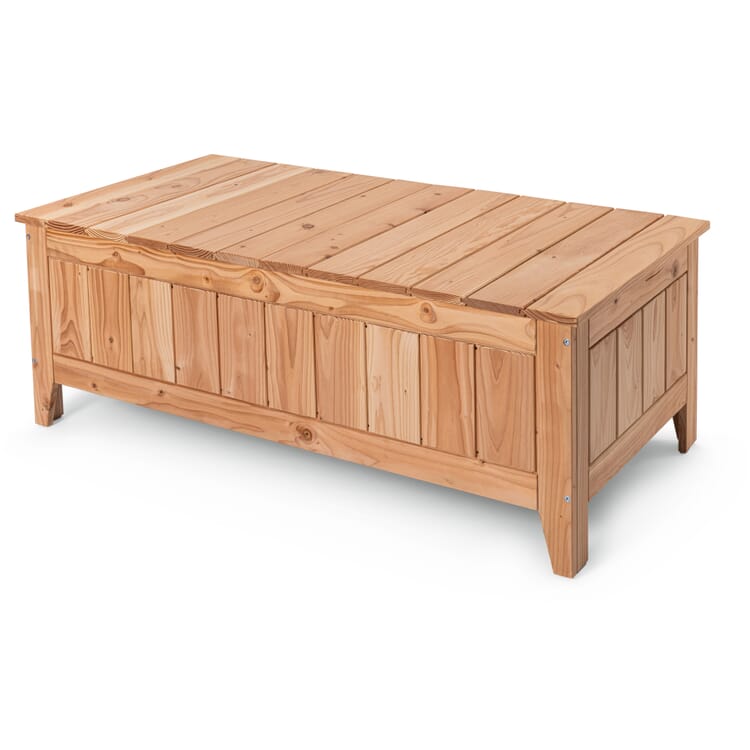
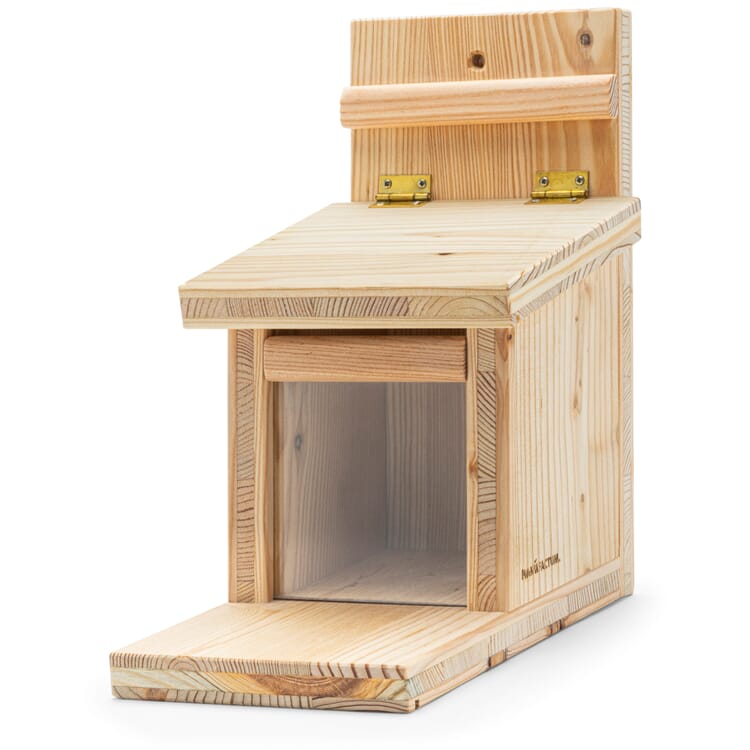
Selected products with Douglas fir


Recommended Topics

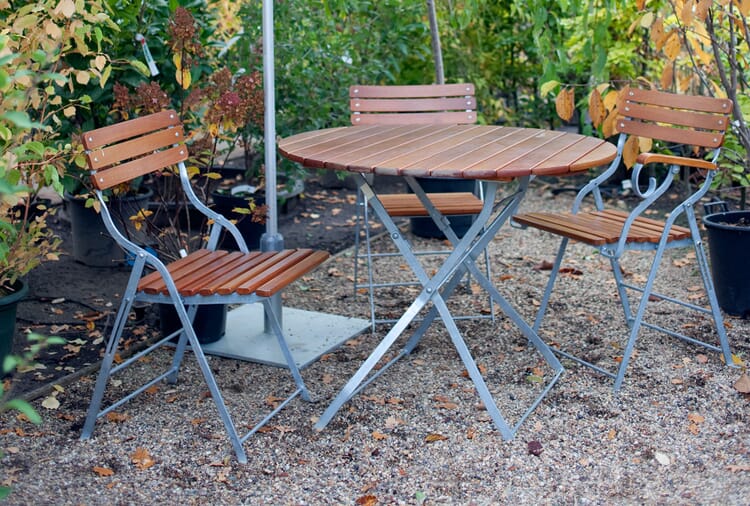
For our garden furniture we use domestic woods whose properties predestine them for rough outdoor use: Insensitive and defying the climate - like the woods of oak, larch and also silver fir, which are still known from facade, boat and water construction. The durable wood of the robinia, which is both strong and flexible, is also resistant to wood rot and is used, for example, to build playground equipment for public children's playgrounds.
View more
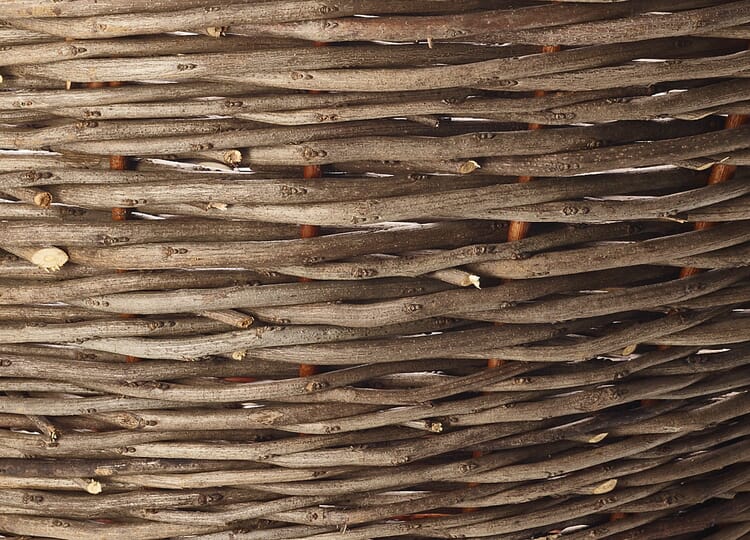
Robinia wood is one of the toughest and most valuable European timber. In its technical and physical properties, it is very similar to oak - in terms of gross density, compressive strength, tensile and flexural strength, it even surpasses the robust oak. And its high resistance to weathering virtually predestines it for use in garden furniture making and in the field of garden equipment.
View more