Topic
Open-pollinated seeds—you reap what you sow

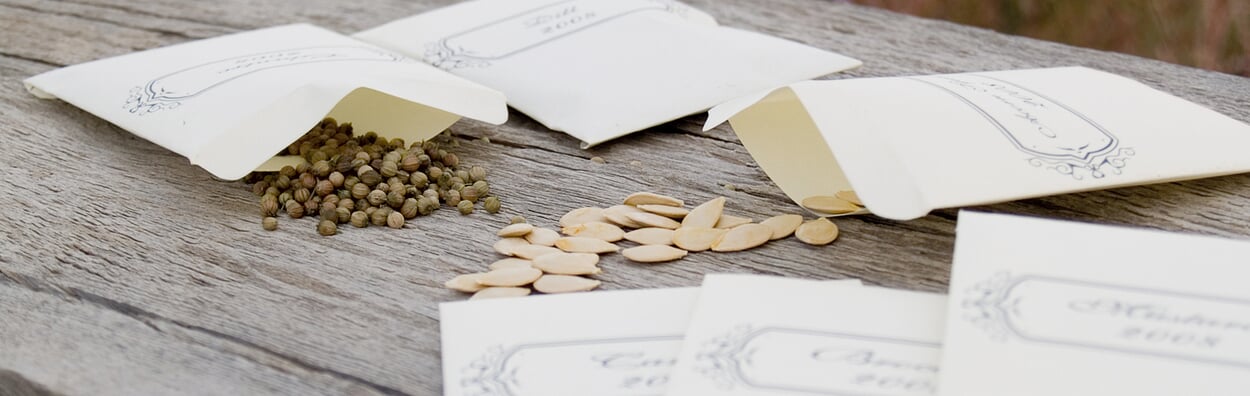
As the saying goes: You reap what you sow. It goes without saying, doesn’t it? But the devil is in the details: It’s all about the “what” and how it comes about, because seed production has changed radically over the last century. In the age of modern breeding operations, the focus has shifted primarily toward quantity and uniformity of yield—aspects such as diversity, taste, suitability for specific locations, and, above all, the ability to reproduce and evolve have largely fallen by the wayside. The seed growers at Manufactum, both for flowers and vegetable seeds, are committed to preserving genetic diversity and provide seeds of time-tested and unusual varieties that bring back color, shape, and the joy of planting.
Sowing doubt. About non-heritable F1 hybrids.
For thousands of years, farmers and gardeners were responsible for cultivating seeds for the next growing season. A portion of the harvest was always set aside to produce new seeds, which were then sown again, exchanged, and passed on. The regional varieties, developed over many years, were not only optimally adapted to the prevailing climatic conditions but also stood out for their unique taste and appearance. People literally reaped the fruits of their own labor.
With the pursuit of ever-higher yields and profit margins, control over seed production—especially in the area of vegetable seeds—has increasingly shifted into the hands of large breeding companies, at least since the 1950s. On the one hand, this led to a drastic loss of variety (an estimated three-quarters of known vegetable varieties have been lost over the past 100 years); on the other hand, the market is increasingly dominated by hybrid varieties that are no longer open-pollinated: They are like high-performance athletes in the world of seeds, but after just one season, they’ve used up all their energy and must be replaced by a new generation the following year. Although new seeds can usually still be harvested from the fruits of such a first sowing, one never knows exactly what will grow from them, because the variety splits into different forms. This prevents replanting from the outset, and farmers and home gardeners are forced to buy new seeds the following year. Good for the industry, bad for growers and the natural evolution of varieties.
Spoiled for choice. Breaking free from the monotony of seeds.

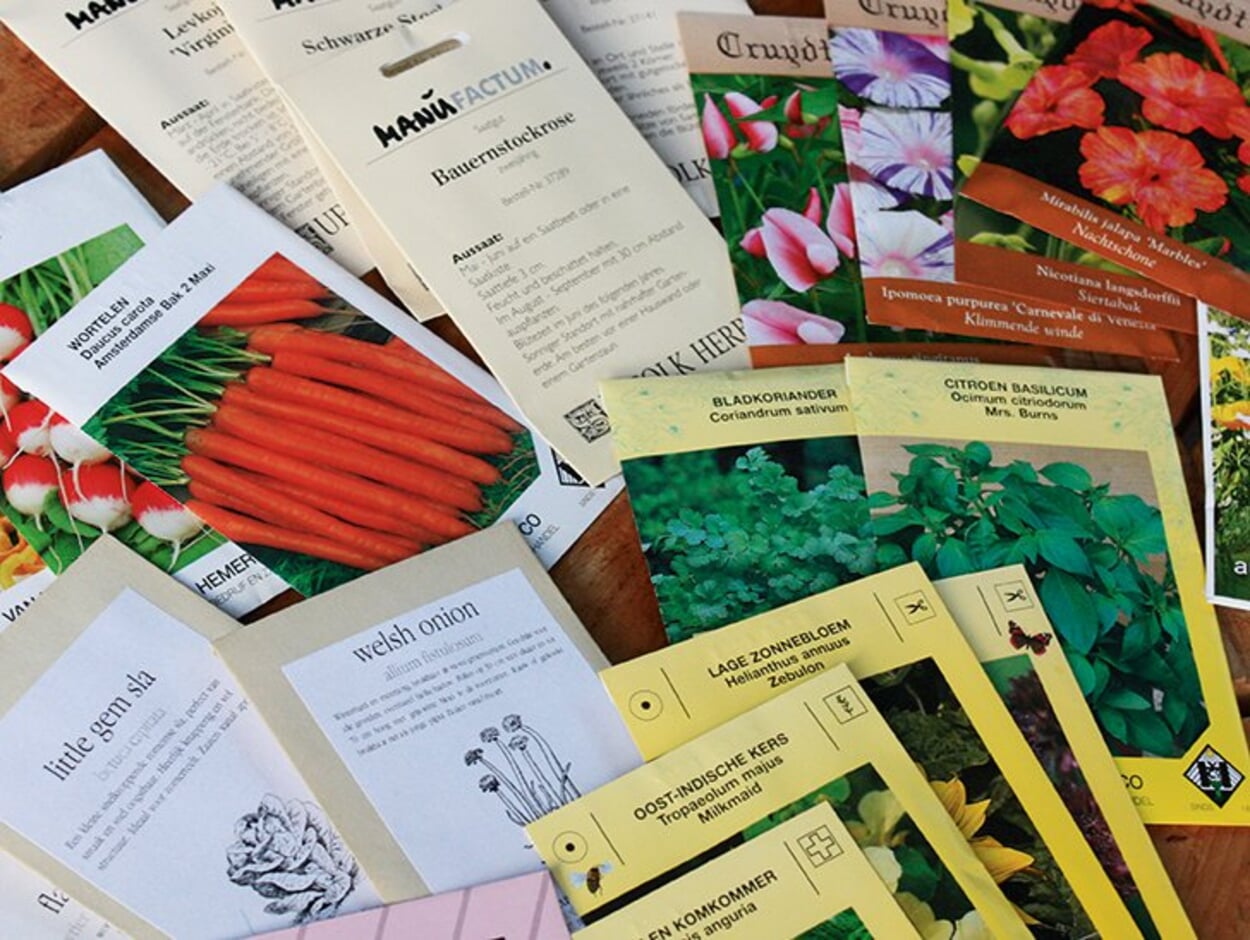
Every year, the same question arises in many places: What should be planted this season? Whether it’s vegetable or flower seeds, you stand in front of the shelves of colorful seed packets at the garden center and, despite the seemingly extensive selection, can’t help but feel like you’re being sold the same thing ten times over, just in different packaging. Accordingly, the seeds are often labeled in a rather formulaic way, simply as “cucumber” or “carrot.” Who cares about the details? The “F1” designation—which identifies the seeds as hybrid crosses and would actually be of interest—usually remains nothing more than an incomprehensible abbreviation. And so, summer after summer, plants bloom and sprout in the nation’s gardens with unrivaled uniformity. While this may promise a good harvest, it promises just as much boredom. And after a year, you find yourself back at the garden center—after all, the life cycle of the seeds is limited.
Sow success. Reap variety. Seeds at Manufactum.
This is not the case with the seeds from our German and English breeders. While the selection of heirloom and regional varieties is often sparse elsewhere, these companies ensure that they are once again made available to home gardeners in all their diversity—naturally open-pollinated and thus capable of being propagated. This not only promotes diversity on the plate and in the flower vase, but also empowers people to get involved in seed gardening themselves: to preserve historic crop varieties and—over the years—possibly even to create new ones.
Whether it’s the ‘Forellenschluss’ head lettuce, ladybug poppy, the ‘Tropfenförmige von Linosa’ tomato, ‘Brauner Fridolin’ radish, Siberian night violet, or all the many other varieties that enchant not only with beautiful names but also with great flavor, long harvest seasons, captivating appearances, and hardy nature—boredom is out of the question. You reap what you sow—and that applies to the seeds in the Manufactum assortment as well. But not just in the first year, but also in the second, the third, and in all the years that follow.