The Viennese coffee house culture. Emphasizes traditional

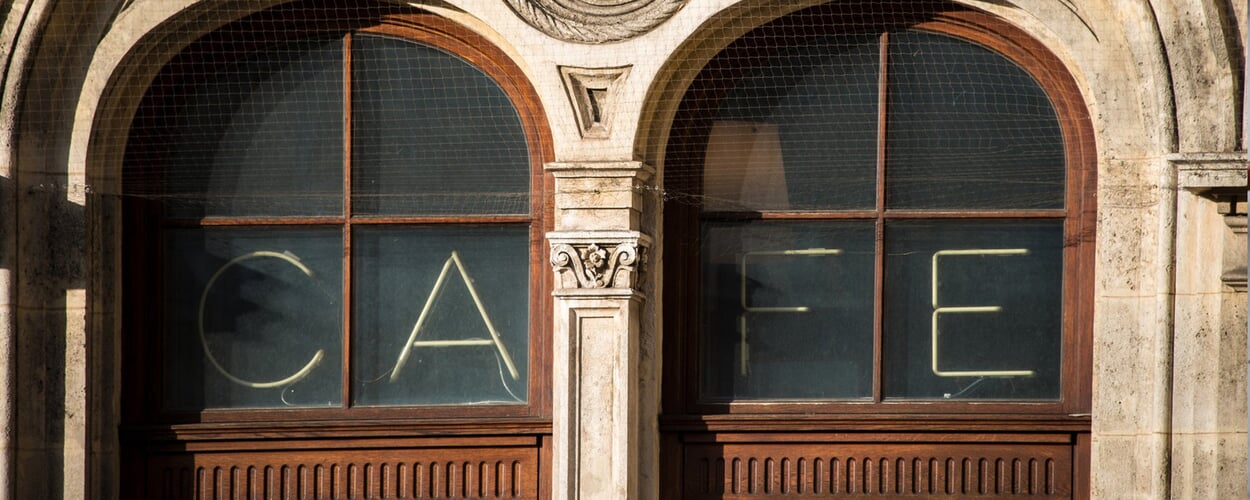
The Viennese were not the first to drink coffee, nor were their coffeehouses ever the only ones. Nevertheless, there is no city in this world that was and still is so closely associated with the word coffeehouse as the Austrian capital. In 2001, Vienna's coffeehouse culture was even designated an Intangible Cultural Heritage by UNESCO. As part of the opening of our first Austrian department store in Vienna, we take a look at the things that make the Viennese coffeehouse a real institution with a recognition effect and a must for every Vienna tourist.
The facility
A traditional Viennese coffeehouse is characterized (at least since the 19th century, before that they were rather charmless, gloomy places) by a number of recurring features, not all of which have to be true, but most of which are very characteristic. On the one hand, there are the marble tables, round or square, then the bentwood chairs, which also became known as coffeehouse chairs, and often as a supplement: plush or at least softly upholstered seat boxes, small séparées with a touch of privacy. Essential is also the newspaper table, on which national and also international periodicals are displayed in wooden newspaper holders - billiard tables, chess or card games complete the entertainment offer in some houses. Large mirrors on the walls, bentwood coat racks and sometimes lavish chandeliers are also common. Those who have the opportunity also offer seating outside, even if it is only three small tables: "Schanigarten" is the name of this specifically Austrian form of outdoor gastronomy.
The coffee specialties
Anyone who visits a Viennese coffeehouse today does so not only to soak up the traditional, historic atmosphere, but above all to enjoy one of the numerous coffee specialties that set the Viennese apart from the international coffee monotony.

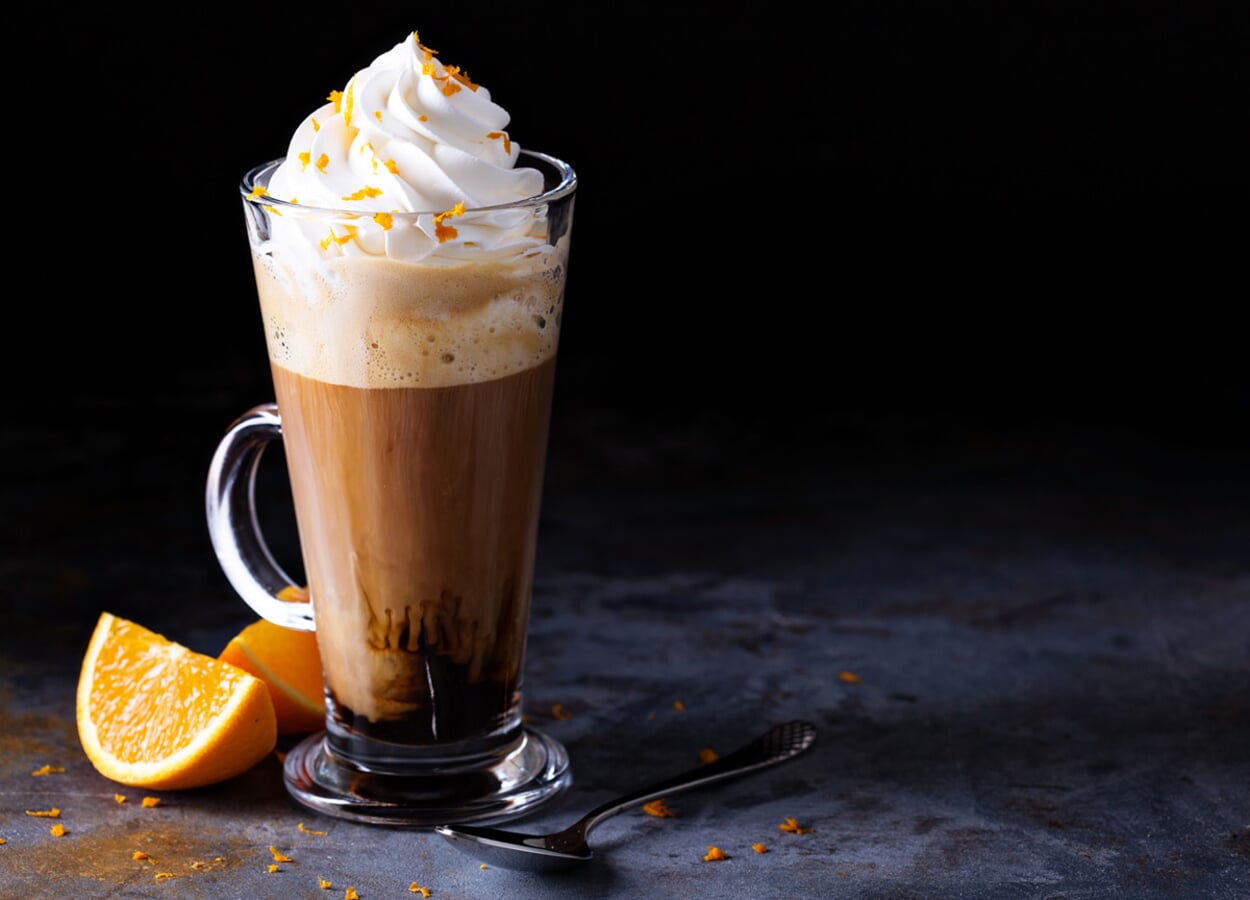
While there are countless variations today, some with creative names, in the early days people apparently still ordered on the basis of a color palette ranging from black to milky white. Each coffee (which in Vienna, by the way, definitely wants to be emphasized on the second syllable) is served with a glass of water on a silver tray and differs from the other by the addition or omission of (whipped) cream (which is nothing other than cream), milk (foam), sugar and spirits in a certain quantity and layering order.
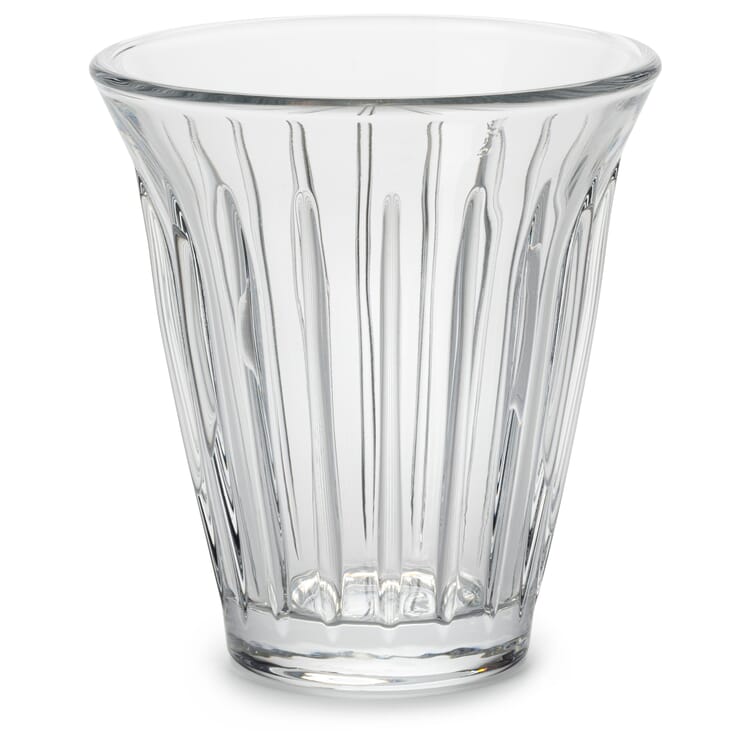
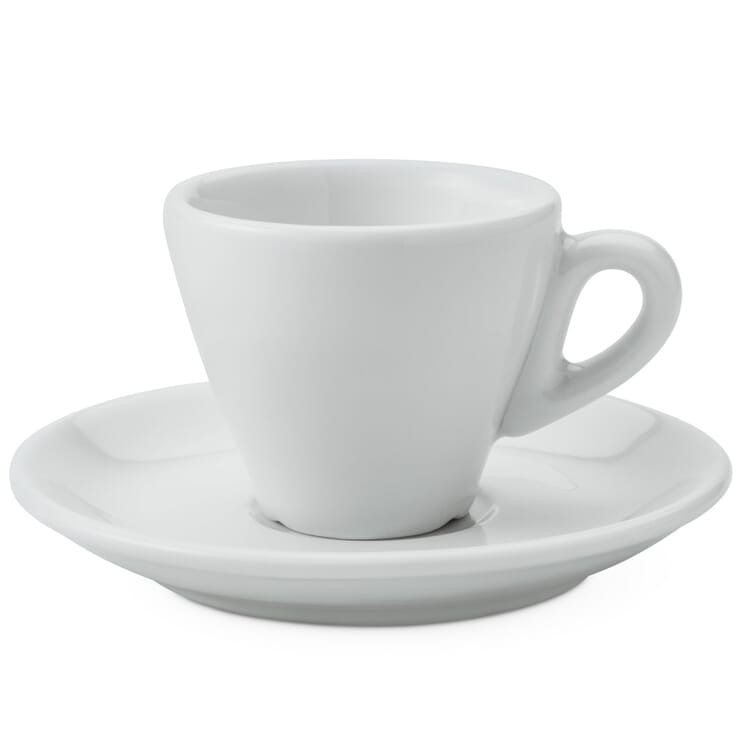
The coffee is served in bowls of various sizes (in our case: cups) or (handled) glasses. The basis of almost all of these specialties, by the way, is a Viennese mocha, a small, black coffee that originally often came out of a soap pot. Today, however, espresso culture has also long since moved into Vienna, and so the production of a mocha is often largely the same as its Italian counterpart. Depending on whom you ask, however, the mocha is prepared with a little more water, brews a little longer and is also traditionally brewed with more strongly roasted beans of the mocha variety. To list all the specialties is beyond the scope, but here are a few of the most common and creative, including their usual composition:
- small and large black: single or double mocha.
- extended (black): Mocha infused with hot water.
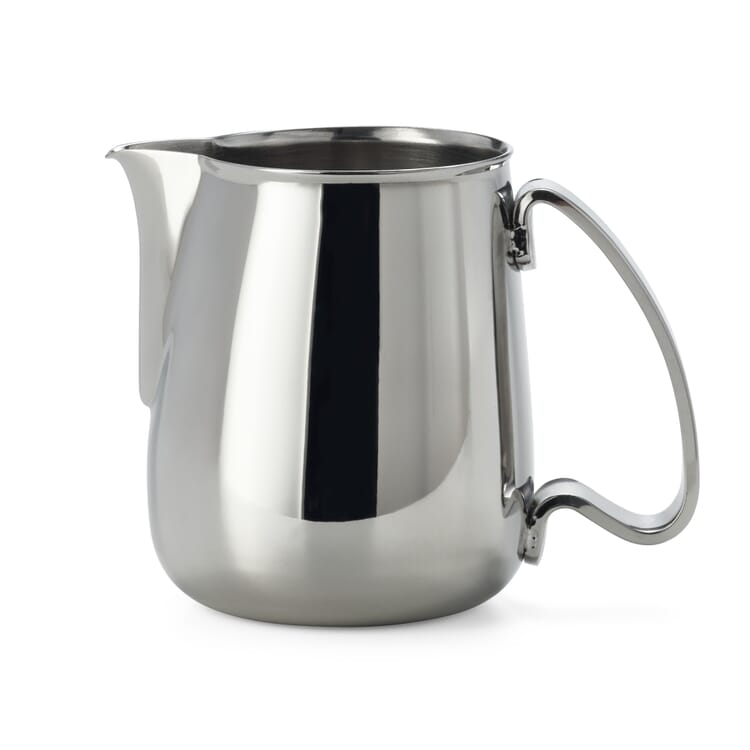
- Small and Large Brauner: Single or double mocha served with cream or milk in a separate, tiny little pot. The mixing ratio is up to the guest.
- Kapuziner: Simple mocha served with a few drops of liquid cream and sometimes topped with whipped cream. Its color is said to be reminiscent of the robe of a Kapuziner monk.
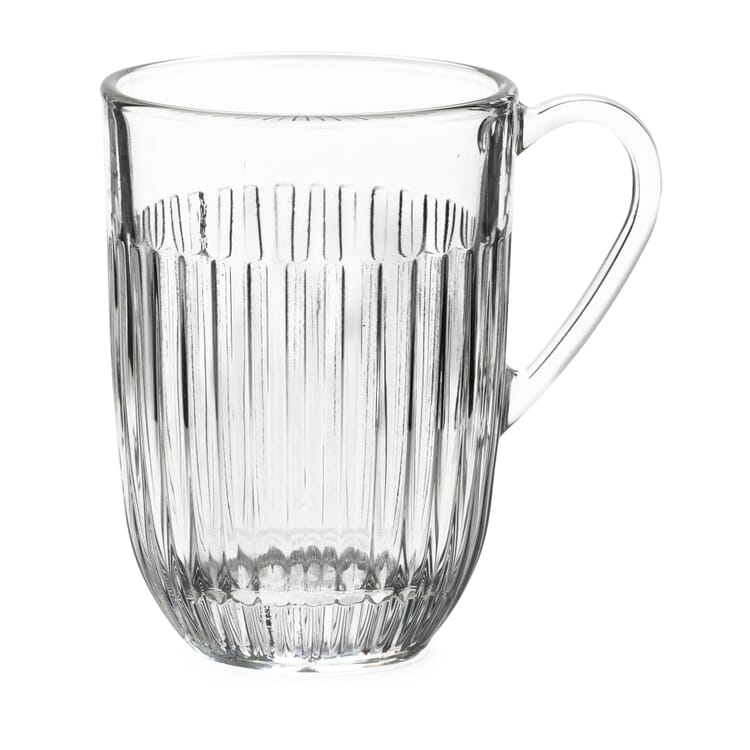
- Einspänner: (Extended) mocha with a lush whipped cream topping (the so-called "Gupf"), served in a glass with a handle. Thus, it could be consumed single-handedly by the coachman of one-horse carriages and remained warm for a long time thanks to the thick layer of cream.
- Viennese Melange: Coffee or extended mocha served with the same amount of very lightly frothed milk in the bowl.
- coffee upside down: one-third mocha, one-third milk and one-third milk foam, served in a glass - comparable to latte macchiato.
- Franziskaner: a melange, instead of milk foam with whipped topping, served in the bowl.
- fiaker: double mocha in a glass with lots of sugar and 1-2 cl of slivovitz or rum, topped with whipped cream.
- emperor's melange: mocha served with beaten egg yolk, honey (or sugar) and cognac, sometimes also with cream.
- rushed Neumann: whipped cream "rushed" in a bowl with a double mocha.
- Maria Theresa: mocha with orange liqueur, served with whipped cream in a handled glass.
The story
The legend persists to this day that the first Viennese coffee house was founded by Georg Franz Kolschitzky, a Polish interpreter and businessman, who sneaked behind enemy lines during the Turkish siege, procured information and was rewarded with coffee beans. A nice story, but unfortunately only half true. Kolschitzky may have been a scout, but he was never a coffee boarder. Rather, the first local coffeehouse was founded by the Armenian merchant (and later spy) Johannes Diodato, who in 1685 received so-called "court freedom" from the Viennese court for two decades, effectively a liquor license from the highest authority. The Viennese soon turned out to be real coffee fans - the number of coffeehouses grew slowly at first, but soon more and more rapidly. 100 years later there were 70, another 40 years later 150, and by 1900 there were 600 of the establishments that had already established themselves in the 19th century as the cultural venues par excellence of the Austrian metropolis and were now, at the turn of the century, experiencing their heyday as literary cafés.
The guests
However, it was not coffee alone that established the reputation of the Viennese coffeehouses. It was above all the public that occupied the coffeehouses as a second home and made them a place of communication, exchange and work - especially since the middle of the 19th century. Whether private, political, business or cultural issues, they were all negotiated here. Artists such as musicians, literary figures, architects and actors, but also scientists, lawyers and politicians - each group had its preferred venue. Some regulars, most notably Peter Altenberg, to whom a memorial was dedicated at Café Central, even went so far as to give "their" café as their postal address, to be reachable there by telephone and to receive guests. Until the middle of the 19th century, only men frequented the cafés. It was not until 1856 that women were also allowed to enter - at first they were limited to appearing as escorts, and later they had their own separate salons for a while. By the way, guests did not have to run up debts for their long-term stays: Ordering a single coffee bought the right to stay as long as they wanted.
The staff
An essential element of the atmosphere in the coffee house is (is) the staff. On the one hand, there is the (head) waiter, who insists on being addressed as "Herr Ober" and traditionally wears a tuxedo. In the past, he was assisted by the piccolo, a (young) assistant waiter who was responsible for setting out tables and chairs and pouring water for the guests. Until the mid-19th century, the only lady in the coffeehouse was the seat cashier, who sat behind the often glassed-in cash register or buffet, and not only handed out sugar and, of course, collected the money, but also acted as a flirt object for the guests.