Manufacturer
Mission Sternenlicht. The Herrnhuter Sterne Manufactory


The Herrnhut Star is considered the origin of all Christmas stars. Conceived more than 180 years ago on the eastern edge of the country as a geometric figure for math class, it now shines around the globe, bringing anticipation and a sense of reflection to the pre-Christmas living rooms of those who own it.
All Products at a Glance






A success story. One we love to tell time and time again
“Our stars are our message,” says Sales Manager Jens Ruppert enthusiastically as he guides visitors through the workspaces of the company’s building, which was newly constructed in 2010. This is where craftsmanship meets tradition. Here, 200 employees work in unison toward the shared goal of festive illumination. They cut paper and plastic film to size, punch, fold, and glue—and in this way, point by point, breathe life into the undisputed number one among Christmas stars. In doing so, they demonstrate a precision and speed that amazes every visitor. According to the staff, it can take an entire year to perfect just one of the many steps involved in creating a complete star so that it meets the company’s high quality standards.
“Our secret is the excellent light transmission of our products,” reveals Jens Ruppert as he turns on the light inside a white-and-red demonstration model. Unlike many other models on the market, the Herrnhut Star doesn’t just shine brightly in the center—it’s characterized by uniform luminosity from the core all the way to the tip. The reason lies in the construction of the paper used, which is produced in this specific form by only two manufacturers in all of Europe. Herrnhuter Sterne, GmbH is willing to accept long wait times in some cases just to be able to work with this paper.
But the company’s success proves it right. Currently, 750,000 stars leave the workshop—affectionately dubbed “Sternelei” by the employees—each year, and the trend is upward. And no matter what diameter they have or whether they’re made of paper or outdoor-grade polypropylene: they all feature the traditional 25 points—17 four-sided and eight triangular ones—arranged on a base shape that mathematicians call a rhombic cuboctahedron, one of the Archimedean solids.
The shape is closely linked to the history of the company, which still belongs to the Evangelical Moravian Church (EBU) today. The EBU, also known as the Herrnhut Brethren Community, is an Evangelical church and is thus affiliated with the Evangelical Church in Germany (EKD) while also serving as a guest member of the Association of Evangelical Free Churches (VEF). This gives it an intermediate position between regional churches and free churches.
Beginning in the 18th century, the Herrnhut Brethren Community made a name for itself through international missionary work. The first people to assemble a Herrnhut Star were the children of these very missionaries, who often had to spend the pre-Christmas season far from their parents at their boarding school back home. Back then, a teacher came up with the ingenious idea of using geometry to help his students cope with their growing longing for home. In 1897, the resourceful businessman Pieter Hendrik Verbeek finally designed the first assembleable star and sold it through the mission’s own bookstore.
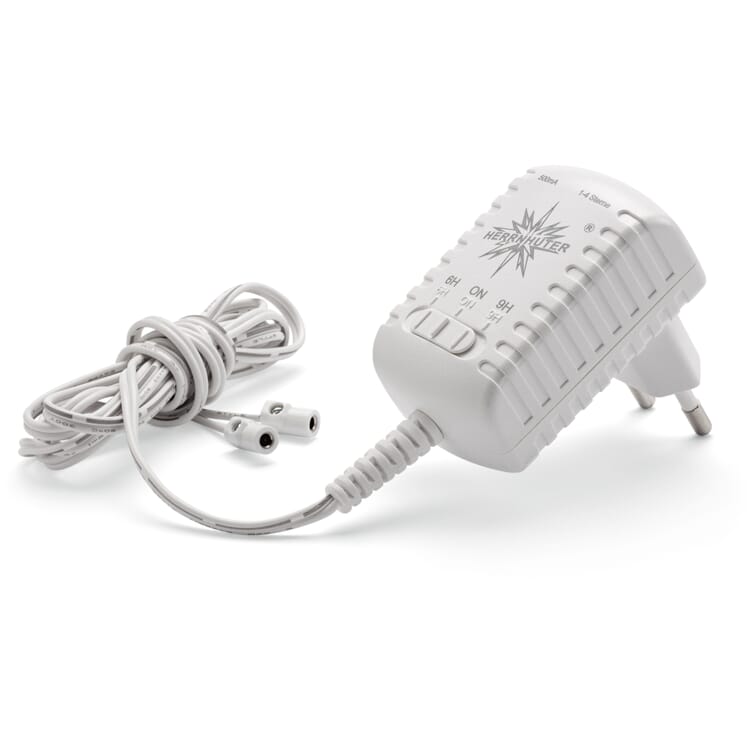
Today, Herrnhuter Sterne GmbH offers a total of 80 variations of its interpretation of the “Star of Bethlehem.” In addition, there are replacement parts and a wide range of accessories: LEDs, cables, clips—everything you need to keep your star in good shape over the years. After all, once purchased, a Herrnhut Star is meant to shine for at least a lifetime. This, explains Jens Ruppert, is an important part of the company’s sustainability-focused philosophy. “We don’t believe in throwing the stars away at some point. That’s why we offer everything needed to keep them repairable.”
Even for very old models, the company strives to provide assistance with repairs as they become necessary. However, the annual tradition of putting the star together is still the responsibility of the buyer and their family. It’s a pre-Christmas ritual that, according to Jens Ruppert, is simply part of the tradition—and one that true lovers of the “ Herrnhuter Sterne ” greatly appreciate. “We’re delighted that the tradition of building the star is still alive today—that families simply sit down together and engage in a contemplative activity. That’s exactly what Christmas should be like.”
Recommended Topics


There are two serious tree decorating traditions. The first comes from the Biedermeier period, the last tasteful epoch of the past 200 years. The Biedermeier tree decorations always consisted of only a few pieces: apples, gilded nuts, brass and painted pewter figures, wooden Erzgebirge toy miniatures and pastries.
View more

Advent decoration can be so many things. In the private sphere, it ranges from the Advent wreath or the arch of lights in the window to decorative elements, which some lovingly, others disparagingly call "Stehrümchen" (and whose quantitative dimensions can vary significantly from person to person), to the central element of the Christmas feast, the magnificently decorated tree. The nativity scene is also an indispensable part of the Christmas decoration in many places.
View more

Have you ever received a self-made Advent calendar? Then you know how great the joy is about it and you can guess how much time and also ingenuity it takes to create an Advent calendar.
View more